

There are many ways to enhance our appearance and boost our confidence. One of those being chin contouring, which involves enhancing the shape or structure of the chin to create a more harmonious profile. This procedure can be done on its own or in combination with other procedures too.
Understanding Chin Contouring
Chin contouring is a procedure that reshapes the chin by augmenting its shape and projection. With Radiesse, it is one of the most impactful—and most underused—treatments in aesthetic medicine. By applying cephalometric principles like the dominance principle and True Vertical Line analysis, a small amount of filler at the chin can rebalance the entire face, reduce the appearance of a heavy lower face, and sharpen the profile without touching anything else.
Its essentially an aesthetic result that doesn't announce itself. No one pulls you aside to ask what you've done. They just notice that something looks different—clearer, somehow. Brighter. More you.
That's the quiet transformation. And more often than not, it starts at the chin.
Chin contouring remains one of the most clinically undervalued treatments in aesthetic medicine. Patients rarely ask for it unprompted. They come in wanting fuller cheeks, smoother lips, a lifted brow—and the chin sits quietly in the background, doing far more work than anyone gives it credit for. When I educate patients to understand the geometry of genetics, facial bone structures, breathing habits, tongue placement, mouth palate and its impact on facial harmony, that oversight starts to look almost inexplicable.
I want to help people understand how aesthetics isn't an a la carte menu and rethinking about areas like the chin, not as an isolated feature to be "fixed," but as a structural anchor that, when properly supported, supports the entire face. We'll walk through the cephalometric framework behind chin analysis, explain why Radiesse was chosen for this work specifically, and address the overfilling/"migration" epidemic that's given fillers a nad reputation.
Why the Chin Is the Most Underrated Feature on Your Face
Ask most people which facial features they'd change, and you'll hear about noses, lips, under-eye hollows, and jawlines. The chin rarely makes the list—not because it's unimportant, but because its influence is almost entirely relational. A deficient chin doesn't draw attention to itself. It redistributes attention to everything else.

A clinically underprojected chin—what's formally called microgenia—presents with a predictable set of consequences. The submental region loses structural support, making the neck-chin junction appear heavier or less defined. The lower face can read as "soft" or undefined even in patients who are neither overweight nor particularly aged. And crucially, a deficient chin clinically presents as a "childish face," suggesting fragility while making the nose appear excessively long.

That last point is worth sitting with. The nose hasn't changed. The perception of it has. This is the dominance principle in action—and it's one of the most powerful clinical concepts in aesthetic medicine.
Treating the Face as a Whole System, Not a Collection of Parts
The most common mistake in aesthetic medicine isn't using too much filler, it's thinking too small. SORRY not sorry, I had to say it. Treating a nasolabial fold without considering the midface. Augmenting lips without accounting for the chin. Adding cheek volume without addressing what's happening below the zygoma. Yes it may feel intimidating where you don't want filler everywhere or to look overdone but trust me, each of these decisions, made in isolation, can produce a technically clean result that somehow looks off fam. Like the saying goes, the best work doesn't look like you had anything done or people can't tell what you do. Just that you look GOOD.
Facial harmony is a systems problem. The face is not a collection of isolated features to be corrected one by one; it's a composition of planes, angles, and proportions that interact continuously. Altering one element changes how every adjacent element reads.
This is why my philosophy guiding our approach isn't about "filling" volume deficits (also filler isn't the answer for everything). It's about harmonizing, restoring balance of your unique anatomy, structural support, and geometric definition. Treatment focuses on strategic placement to restore balance and facial definition, not simply replacing what's been lost.
The Science of Facial Proportions and Reference Lines
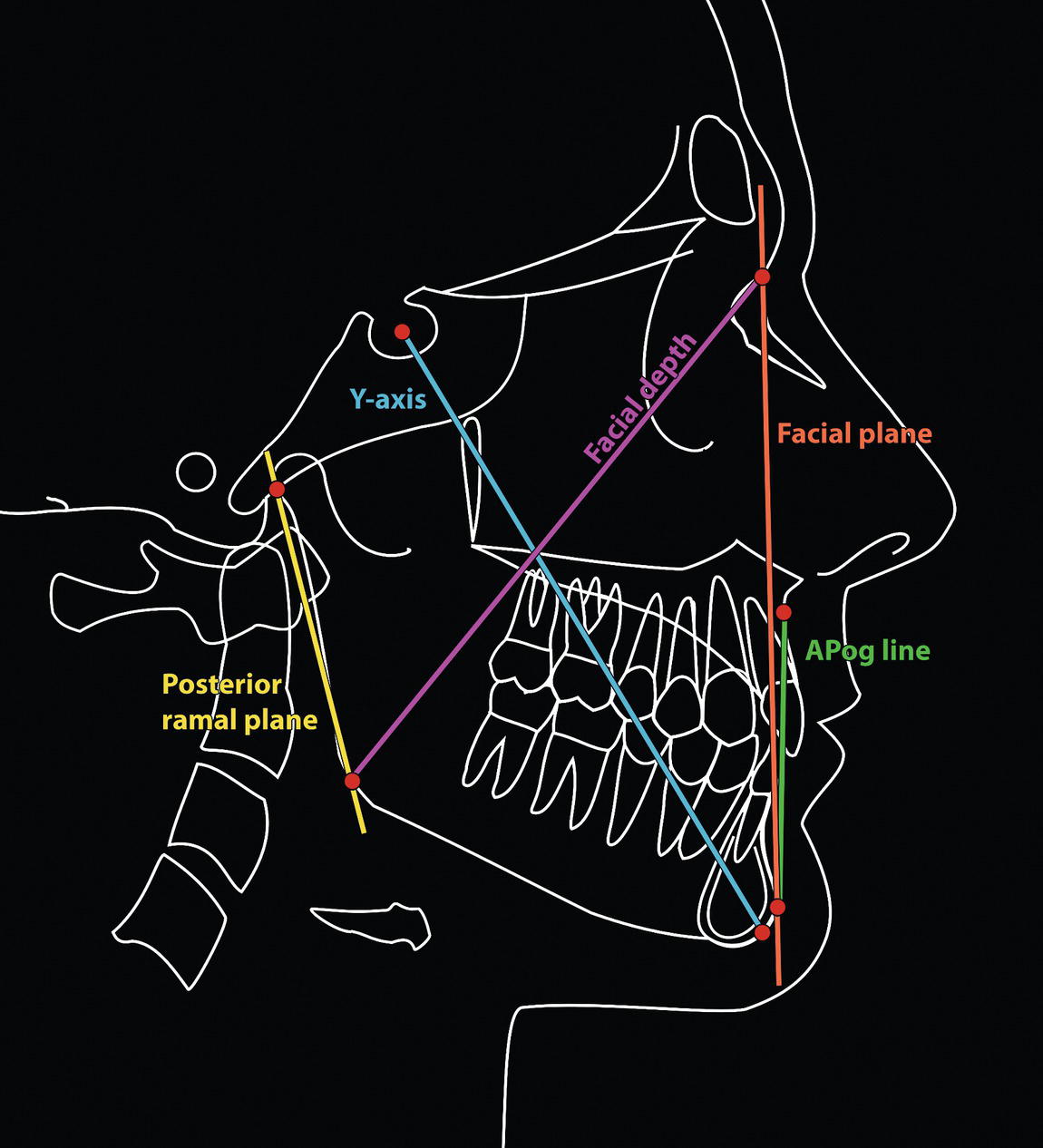
Good aesthetic outcomes aren't guesswork. They're grounded in cephalometric analysis—a system of reference points and lines originally developed in orthodontics and craniofacial surgery, now essential to advanced filler practice.
For chin assessment, three reference tools matter:
The True Vertical Line (TVL) drops vertically through the subnasale point in a profile photograph. Ideal soft tissue pogonion (the most anterior point of the chin) sits 0 to 4 mm behind this line. When it falls significantly further back, horizontal chin deficiency is confirmed.

The E-Line (Ricketts' Esthetic Line) runs from the nasal tip to the soft tissue pogonion. In the average Caucasian profile, the lower lip sits approximately 2 mm behind this line, and the upper lip approximately 4 mm behind it. A recessed chin alters this line's trajectory entirely, making the lips appear more protrusive than they actually are.
The Menton (Me') marks the lowest point of the chin in both frontal and profile views. Applying filler at the menton elongates the lower third, equalizes vertical facial proportions, and—critically—reduces the frontal appearance of a double chin by restoring structural support to the submental region.

The lower third of the face should also meet a vertical proportion standard: the upper lip (subnasale to stomion) occupies one-third of the lower third's total height, while the lower lip and chin occupy the remaining two-thirds. When the chin is deficient, this ratio collapses—and the lower face reads as compressed, heavy, or undefined.
The Dominance Principle: How One Small Change Rewires Everything
The dominance principle states that a large anatomical structure adjacent to a regular-sized one makes the regular structure appear larger than it is—and vice versa. A regular nose next to a deficient chin is perceived as dominant and elongated. Advance the chin, and without touching the nose at all, the nose appears shorter and better proportioned.
This is documented clearly in the cephalometric literature: "A regular-sized nose adjacent to a deficient chin is perceived as dominant and 'too long.' Advancing the chin with fillers balances this dominance and decreases the perception of an elongated nose."
The same principle applies in reverse. A heavy submental area—what most patients call a "double chin"—decreases the perceived dominance of the mandible, softening jawline definition and making the face appear rounder or heavier than it structurally is. Restoring chin projection shifts the geometry back in favor of the jaw.
This is why experienced injectors look at the chin even when the patient came in asking about their nose. Or their lips. Or their cheeks. The chin is rarely just about the chin.
Radiesse: Why We Chose It for Chin Contouring (most times)
Not every filler is appropriate for every indication. Chin contouring requires a product that can provide immediate structural projection, maintain definition under the mechanical stresses of jaw movement, and—ideally—deliver lasting biological benefit beyond the initial correction.
Radiesse (calcium hydroxyapatite) meets all three criteria, which is why it was selected for this application.
Immediate and durable structure is Radiesse's defining characteristic. Its calcium hydroxyapatite microspheres provide a firm, lift-capable scaffold that holds chin projection without the soft "pillow" effect that hyaluronic acid gels can produce in this area when used incorrectly. The result looks defined rather than simply inflated.
The second benefit is biological. Radiesse's carboxymethylcellulose carrier gel is gradually resorbed, leaving calcium hydroxyapatite microspheres that stimulate the body's own collagen production. Over months, the surrounding tissue thickens and firms. This means the result doesn't simply fade—it transitions, with neocollagenesis supporting the contour even as the filler itself is metabolized.
For chin contouring specifically, this dual mechanism matters. The chin needs projection and definition, not just volume. Radiesse delivers both in the short term, and supports lasting tissue quality in the long term.
The Overfilled Epidemic—and How We Avoid It
Let's address the elephant in the room people: overfilled faces. The pillow-face phenomenon—looks like cheeks that appear spherical, profiles that look structurally uniform, and faces that have lost all sense of geometric definition—has become closely associated with filler treatment in the public consciousness.
This is a technique failure. Not a filler failure.
Overfilling results from a volume-first philosophy: the belief that aesthetic improvement is primarily a matter of adding more and more and more. No. It ignores the geometric reality of the face, which is not organized around volume but around planes, angles, and contrasts between light and shadow.
The image composition framework explains this clearly: "Rounded faces with undefined angles and few planes are perceived as childlike. Introducing straight lines, defined angles, and distinct planes with fillers provides a more structured, adult look."
When fillers are placed to alter light reflection—transforming shadows into highlights, creating sharp angles where there was previously soft uniformity—the result looks defined and natural. When fillers are placed simply to add volume, you get the opposite: a face that's simultaneously "fuller" and somehow less interesting. More monotonous.
My approach to chin contouring is structured around this distinction. We're not trying to make the chin bigger or make you look crazy. We're trying to make the face more harmonious to your objective goals and anatomy constraints. The amount of product used is always dictated by the geometric target, not by a desire to fill.
What a Chin Treatment Actually Feels Like
For patients who haven't had filler in this area before, the experience is typically less dramatic than they expect, in all the right ways.
The chin and mentolabial fold area is approached with precise placement in the deep subcutaneous or supraperiosteal plane. Because Radiesse is a thicker material, it's placed strategically rather than distributed broadly. A small amount goes a long way.
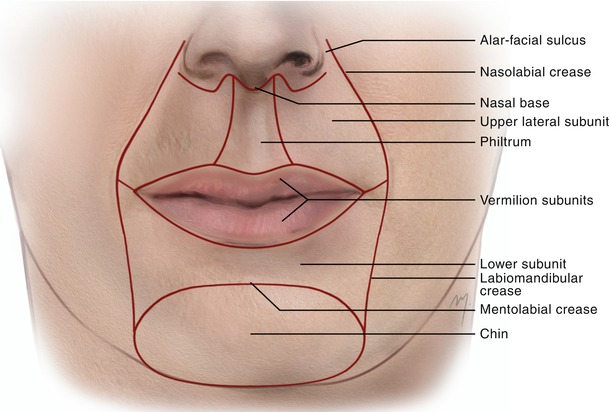
There's a practical note worth mentioning: when augmenting chin projection, the mentolabial fold—the curved sulcus between the lower lip and the chin—can appear slightly deeper afterward as the chin advances forward. This is an anatomical consequence, not a complication. Addressing the mentolabial fold ("chin shadow") simultaneously integrates the chin into the lower face, increases apparent lower lip length, and creates a visually seamless result. The two areas are treated as a functional unit.
Post-procedure, patients typically experience mild swelling and occasional bruising for 48 to 72 hours. The structural result becomes evident as swelling resolves, usually within a week. The final outcome, as collagen stimulation continues, develops over three to six months.
Who Is a Good Candidate for Chin Contouring?
Candidacy assessment relies on clinical photography and facial analysis rather than subjective criteria. Strong candidates typically present with one or more of the following:
- Horizontal chin deficiency confirmed on profile view, where soft tissue pogonion falls more than 4 mm behind the True Vertical Line
- A perceived excess nasal projection that may be partly attributable to relative chin deficiency rather than nasal anatomy
- Undefined lower third with soft mentolabial definition and reduced projection relative to the lower lip
- Submental heaviness or early jowling, where structural support loss at the chin is contributing to loss of neck-jaw definition
- Overall facial softness or "roundedness" that persists despite normal weight, where geometric definition is the deficit rather than volume per se
Patients who present requesting nasal rhinoplasty alternatives are also strong candidates. In many cases, advancing the chin 3 to 5 mm—a minor correction in absolute terms—produces a profile improvement that meaningfully reduces the perceived nasal prominence, without surgery or recovery time.
Start at the Foundation
The most effective aesthetic work is often the least obvious ones. A well-placed 1 to 2 mL of Radiesse at the chin won't show up in a before-and-after photo with a dramatic arrow. What it will do is rebalance the geometry of the lower face, reduce the perceived dominance of the nose, sharpen the profile, and restore the structural scaffolding the lower third needs to look defined.
That's the quiet transformation. A recalibration.
If you're considering chin contouring, or curious whether your facial concerns might be better addressed at the foundation rather than in the features themselves, a thorough facial analysis is the right first step. The cephalometric markers I review with you are specific and objective. The improvements, once made, speak clearly and for themselves.

Frequently Asked Questions
How is chin deficiency diagnosed before treatment?
Chin deficiency is assessed using profile and frontal photographs. The most reliable method measures the distance from the True Vertical Line—a vertical dropped through subnasale—to the soft tissue pogonion. Ideal projection sits 0 to 4 mm behind this line. Significant recession beyond this range confirms horizontal chin deficiency and guides the correction target.
Why is Radiesse used for chin contouring instead of hyaluronic acid?
Radiesse (calcium hydroxyapatite) provides firm, structural definition that holds projection under the mechanical stresses of the chin area. Its calcium hydroxyapatite microspheres also stimulate collagen production over time, meaning the result has both immediate and progressive benefit. Hyaluronic acid can be appropriate in some chin contexts, but tends to produce softer results that may not maintain definition as effectively in this anatomical region. I use both.
Does chin filler make the nose look smaller?
This is one of the most clinically significant effects of chin augmentation, and it's backed by the dominance principle: a deficient chin adjacent to a normally proportioned nose makes the nose appear larger and more dominant than it is. Advancing the chin—even by a few millimeters—rebalances this relationship and decreases the perceived nasal projection. The nose itself hasn't changed. The geometry has.
What is the mentolabial fold ("chin shadow"), and why is it treated at the same time as the chin?
The mentolabial fold is the curved sulcus between the lower lip and the chin. When chin projection is increased, this sulcus can deepen as the chin moves forward relative to the lip. Treating it simultaneously integrates the chin into the lower face, visually lengthens the lower lip, and produces a more cohesive, natural result.
How long does chin contouring last?
Radiesse typically lasts 12 to 18 months in most facial areas and sometimes the same for ordinary hyaluronic acid based fillers. In the chin—where movement is less pronounced than around the mouth—longevity tends toward the longer end of this range. Sometimes neurotoxins are also utilized to support this. The collagen stimulation effect with Radiesse, can mean that tissue quality often remains improved even as the filler itself is gradually metabolized.
Is chin contouring a good alternative to surgical chin implants?
For mild to moderate horizontal chin deficiency, filler-based augmentation offers a non-surgical alternative with no downtime and immediately reversible results (if hyaluronic acid is used) or a gradual transition back to baseline (with Radiesse). Patients with significant skeletal deficiency or those seeking permanent correction may ultimately be better served by surgical options (Dr. Dhir in Beverly Hills), which I discuss candidly during consultations.
What does "overfilling" mean, and how is it avoided?
Overfilling refers to excess filler volume that obscures facial planes, softens geometric definition, and produces an unnaturally rounded appearance. It results from a volume-first treatment philosophy rather than a harmony-first one. Avoiding it requires treating the face as a geometric composition—placing product to alter light, shadow, and angles rather than to simply add bulk—and always calibrating the amount of product used to a specific proportional target rather than a general desire for more.
https://doi.org/10.4041/kjod.2014.44.4.184
Espinar-Escalona, E., Ruiz-Navarro, M. B., Barrera-Mora, J. M., Llamas-Carreras, J. M., Puigdollers-Pérez, A., & Ayala-Puente, J. (2013). True vertical validation in facial orthognathic surgery planning. Journal of clinical and experimental dentistry, 5(5), e231–e238. https://doi.org/10.4317/jced.51188