

Mood swings, fatigue, and skin flares often show up together because they share a common root: systemic inflammation driven by gut health, hormonal signaling, and stress response. Rather than treating each symptom separately, an integrative approach that addresses gut integrity, cortisol regulation, and sleep quality can improve skin clarity while easing fatigue and emotional volatility at the same time.
A patient once described her skin flares as "showing up right on schedule with my worst weeks"—the same stretches when she felt exhausted no matter how much she slept, and when her mood swung from irritable to flat within hours. She wasn't imagining a pattern. She was describing one of the most consistent, and most under-treated, connections in dermatology: the link between systemic inflammation, gut health, and skin.
Traditional dermatology tends to treat skin flares as isolated events. A breakout gets a topical retinoid. Redness gets a prescription for rosacea. Rarely does anyone ask whether the patient has been sleeping poorly, running on stress hormones, or dealing with digestive symptoms that seem unrelated to their face. But skin doesn't operate in isolation. It's an organ wired into the same inflammatory, hormonal, and neurological systems that regulate mood and energy.
This post looks at why mood swings, fatigue, and skin flares cluster together instead of appearing at random, and what an integrative treatment approach—one that treats skin as a downstream signal of systemic health—can actually accomplish.
What Is the Gut-Hormone-Skin Axis?
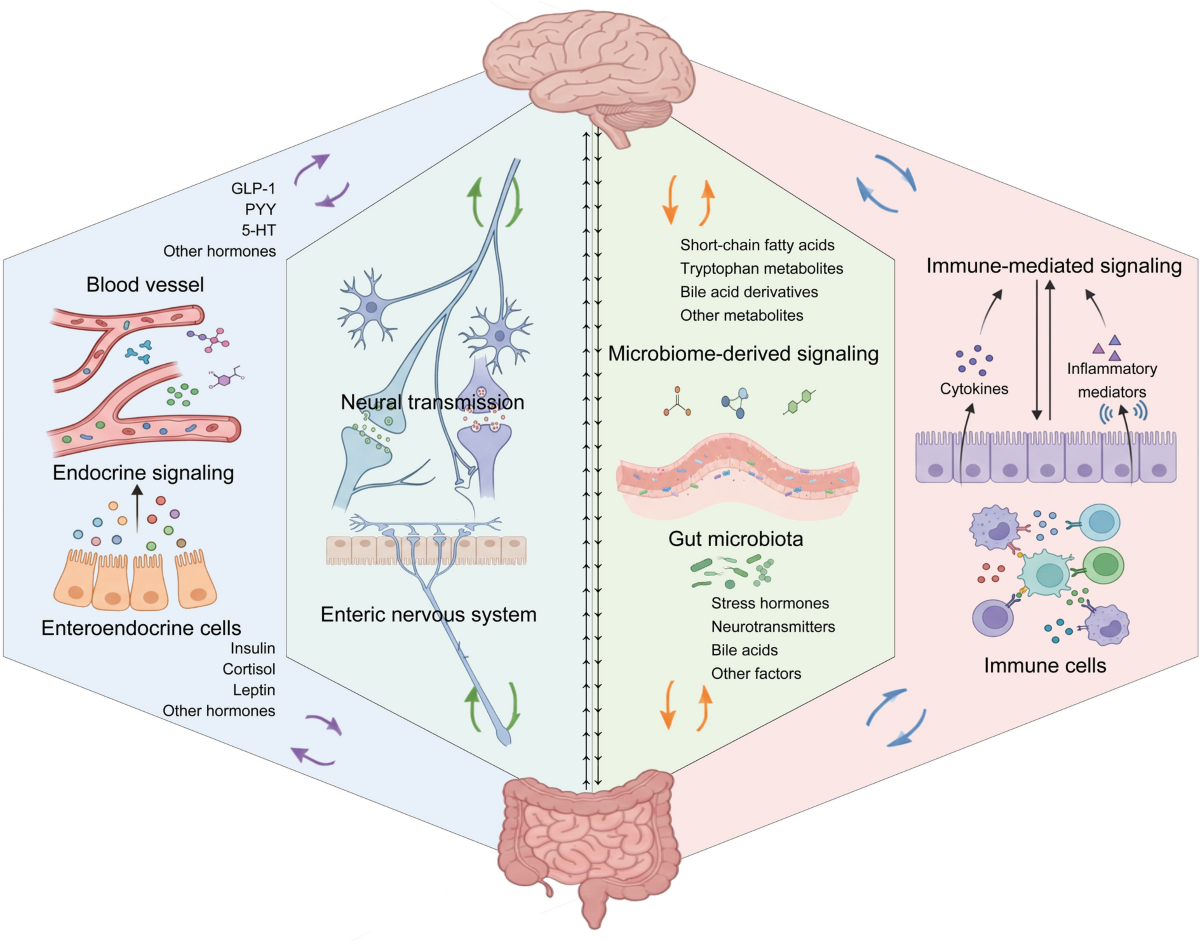
The gut-hormone-skin axis describes the biological communication network connecting digestive health, hormonal regulation, and skin function. It's not a metaphor—it's a physiological pathway with measurable mechanisms.

How does gut dysbiosis lead to skin inflammation?
Gut dysbiosis, an imbalance between beneficial and harmful gut bacteria, disrupts the intestinal barrier, the single-cell-thick lining that normally keeps bacterial byproducts contained within the gut. When that barrier becomes more permeable, a condition often referred to as increased intestinal permeability, bacterial fragments known as lipopolysaccharides (LPS) can enter the bloodstream.
LPS is a potent trigger for the immune system. Once it circulates systemically, it activates immune cells and promotes the release of inflammatory signaling molecules throughout the body. Skin, with its dense network of immune cells, is highly responsive to this kind of systemic immune activation. This is why gut-related inflammation so often surfaces as a skin flare rather than staying contained to the digestive tract.
The gut also plays a direct role in hormone metabolism, particularly estrogen clearance and insulin sensitivity. When gut bacteria are imbalanced, hormone regulation becomes less efficient, which can influence sebum production and the skin's barrier function. Skin that produces excess sebum or struggles to maintain an intact barrier becomes more vulnerable to breakouts, sensitivity, and flare-ups.
Emotional stress and inadequate sleep both increase intestinal permeability and disrupt the gut microbiome. That means a stressful week or a string of short nights doesn't just leave someone feeling frazzled—it can measurably shift gut function in ways that show up on the skin days later. This delayed timeline is part of why the connection is so often missed: the skin flare doesn't arrive at the same moment as the stressor, so the two rarely get connected in a patient's mind.
Systemic Inflammation, and Skin Health
Systemic inflammation refers to a persistent, low-grade immune response that circulates throughout the body, rather than the sharp, short-lived inflammation associated with an injury or infection. Acute inflammation resolves once the threat is gone. Chronic low-grade inflammation doesn't resolve—it simmers, quietly influencing multiple organ systems at once.
What are the measurable markers of systemic inflammation?
Clinically, systemic inflammation is associated with cortisol dysregulation and elevated inflammatory cytokines—signaling proteins that coordinate immune activity. When cortisol patterns become erratic (too high, too low, or mistimed relative to the body's natural rhythm), immune regulation weakens, and cytokine levels tend to rise. Skin cells respond directly to these cytokines, which can accelerate inflammatory skin conditions like acne, eczema, and rosacea.
How does inflammatory skin worsen mood and fatigue?
This relationship also runs in reverse. Inflammatory skin conditions themselves are stressful, both physically and psychologically. Visible flares can disrupt sleep, increase anxiety, and lower mood, which in turn raises cortisol and inflammatory markers even further. The result is a feedback loop: inflammation triggers skin flares, skin flares worsen mood and sleep, and poor sleep and low mood feed back into more inflammation.
Insulin resistance, where cells respond less efficiently to insulin, is closely tied to systemic inflammation. Elevated insulin levels stimulate androgen activity and sebum production, which can worsen acne-prone skin. Blood sugar dysregulation also promotes glycation, a process that can stiffen collagen and accelerate visible skin aging. This gives systemic inflammation yet another route into skin health, separate from but overlapping with the gut-immune pathway described above.
Why Do These Things Happen Together?
Once inflammation and cortisol dysregulation are part of the picture, the clustering of these three symptoms starts to make physiological sense rather than seeming coincidental.
What role does cortisol play in linking stress and skin health?
Cortisol has a dual function: it's the body's primary stress hormone, and it's also a key regulator of immune activity. In short bursts, cortisol suppresses inflammation. But with chronic stress, cortisol signaling becomes dysregulated, and its anti-inflammatory effect weakens. The immune system, no longer receiving a clear "stand down" signal, stays activated—contributing to both mood instability and ongoing skin inflammation.
Sleep is when the skin does much of its repair work, including collagen synthesis and barrier restoration. Poor sleep quality shortens or disrupts this repair window, leaving skin less equipped to recover from daily stressors. Poor sleep also raises inflammatory markers and disrupts cortisol rhythm, compounding the inflammatory load already affecting the skin.
Are mood and skin conditions linked through neurotransmitters?
Neurotransmitters like serotonin, largely produced in the gut, influence both mood regulation and skin physiology. Imbalances in gut-derived serotonin production have been associated with both mood disorders and inflammatory skin conditions, offering another point of overlap between the gut, the brain, and the skin. This may help explain why skin flares so frequently coincide with periods of anxiety or low mood, rather than tracking neatly with topical triggers alone.
Integrative Approach With Skin Health
If mood, fatigue, and skin flares share root causes, then treatment that only targets the skin's surface will always be working against the tide. An integrative approach aims to calm the underlying systemic inflammation, giving the skin a better foundation to heal from.
Which dietary changes help reduce systemic inflammation?
Anti-inflammatory eating patterns—rich in fiber, omega-3 fatty acids, and polyphenol-containing produce, while limiting refined sugar and processed foods—can help stabilize blood sugar and support a healthier gut microbiome. For some patients, a structured elimination diet, done under professional guidance, can help identify specific food sensitivities contributing to gut irritation and downstream skin flares.
Because cortisol and sleep quality are so directly tied to inflammation, stress management techniques (such as consistent mindfulness practice, regular movement, or therapy) and sleep optimization aren't just "wellness extras." They function as legitimate skin treatments, addressing the inflammatory drivers that topical products can't reach.
How does gut healing affect skin clarity?
Protocols aimed at restoring gut barrier integrity and microbial balance—often involving targeted probiotics, prebiotic fiber, and reducing gut irritants—can lower circulating LPS and systemic inflammation over time. Patients pursuing gut healing protocols alongside their skincare routine often notice improvements in skin clarity that track with improvements in digestive symptoms, reinforcing the connection between the two systems.
Lifestyle and gut-focused interventions work on a longer timeline than topical or prescription treatments, generally taking weeks to months to show visible results. For active flares or scarring, combining these root-cause strategies with targeted dermatological treatment—such as anti-inflammatory topicals, prescription therapies, or in-office procedures—can address immediate symptoms while the deeper systemic work takes hold.
Certain micronutrients support both mood regulation and skin barrier function, including omega-3 fatty acids, zinc, vitamin D, and magnesium. While supplements aren't a replacement for addressing gut health and stress directly, they can help fill nutritional gaps that make it harder for the body to regulate inflammation and repair skin efficiently.
Treating Skin as a System, Not a Symptom
Mood swings, fatigue, and skin flares aren't three separate problems that happen to occur in the same person. They're expressions of the same underlying systemic inflammation, routed through the gut, hormonal signaling, and cortisol regulation. Treating the skin in isolation—chasing each flare with a new topical—can offer short-term relief, but it leaves the inflammatory engine driving all three symptoms untouched.
An integrative approach, one that considers gut health, sleep, stress, and diet alongside dermatological care, tends to produce more durable results. It also tends to improve more than just the skin. Patients who address these root causes often report steadier moods and more consistent energy, not just clearer skin.
If you've noticed your own skin flares clustering around stressful periods, poor sleep, or low moods, that pattern is worth bringing to a healthcare provider who's willing to look at the whole system rather than just the surface.
Frequently Asked Questions
Why do my skin flares seem to happen at the same time as mood swings or fatigue?
These symptoms share common root causes, including systemic inflammation, cortisol dysregulation, and gut health disruptions. When one system becomes inflamed, it tends to affect mood, energy, and skin simultaneously rather than in isolation.
Can improving gut health actually clear up my skin?
For many people, yes. Gut healing protocols that restore intestinal barrier integrity and microbial balance can reduce circulating inflammatory triggers like LPS, which often leads to measurable improvements in skin clarity over time.
How long does it take to see skin improvements from lifestyle changes?
Because these interventions work by reducing systemic inflammation rather than treating the skin directly, most patients need several weeks to a few months of consistent dietary, sleep, and stress management changes before seeing noticeable results.
Should I stop dermatological treatment if I'm addressing gut health and stress?
No. Lifestyle and gut-focused strategies work best alongside targeted dermatological care, especially for active flares or existing scarring. Combining both approaches addresses immediate symptoms while resolving the deeper systemic drivers.
What's the first step in addressing this connected pattern?
Tracking when skin flares occur alongside mood changes, fatigue, sleep quality, and digestive symptoms can help identify patterns. Sharing this information with a healthcare provider allows for a more integrative treatment plan rather than isolated symptom management.