

Facial "aging' often shows up first as volume loss in deep fat compartments, not just fine lines or sagging skin, which is why subtle treatments, when used thoughtfully of course, can restore structure without changing how someone looks. Because in this day and age where authenticity is scarce, lets try not to look like clones! My guiding principle will always be skin health first, cosmetic second, and respecting each person's choice to simply feel like themselves.
Aging never happens the way we expect it to. It doesn't announce itself with a single thing or a specific birthday. Instead, it creeps in quietly, showing up in a photograph that looks almost off, or in a mirror that reflects someone who seems a little more tired than you feel.
The Anatomy of Change: Why Faces Age From the Inside Out
Most people assume aging is a surface-level problem: skin gets looser, gravity pulls it down. But the real story starts deeper, in the layers of fat that cushion the face, bone, and muscle.
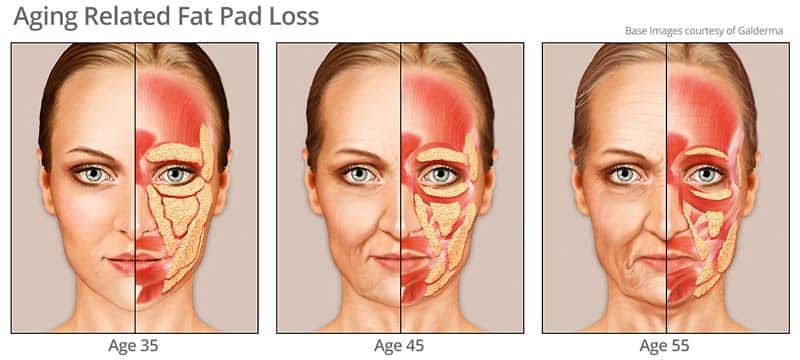
The face isn't one continuous pad of fat sitting under the skin. It's made up of distinct fat compartments, separated by fibrous walls, each with its own job. Some compartments sit high on the cheeks, providing that youthful "apple" contour. Others sit lower, near the jawline and chin, providing structural support that keeps the lower face looking defined.
As we age, these compartments don't just shrink evenly. They shift, deflate, and separate at different rates. A compartment that once sat plump beneath the eye may lose volume years before a compartment near the jaw does. This uneven deflation is what creates the visual complexity of an aging face. It's a rearrangement of the entire architecture, one that skin alone can't fix, because skin was never the primary problem.
Understanding this shift is the foundation of any thoughtful approach to facial refreshment. Treating a symptom on the surface without addressing the structural cause underneath rarely delivers a result that looks natural.
The "Chin Shadow": A Story of Subtle Refreshment
A patient once described her frustration this way: "I don't look sad, and I'm not sad. But everyone keeps asking if I'm tired."
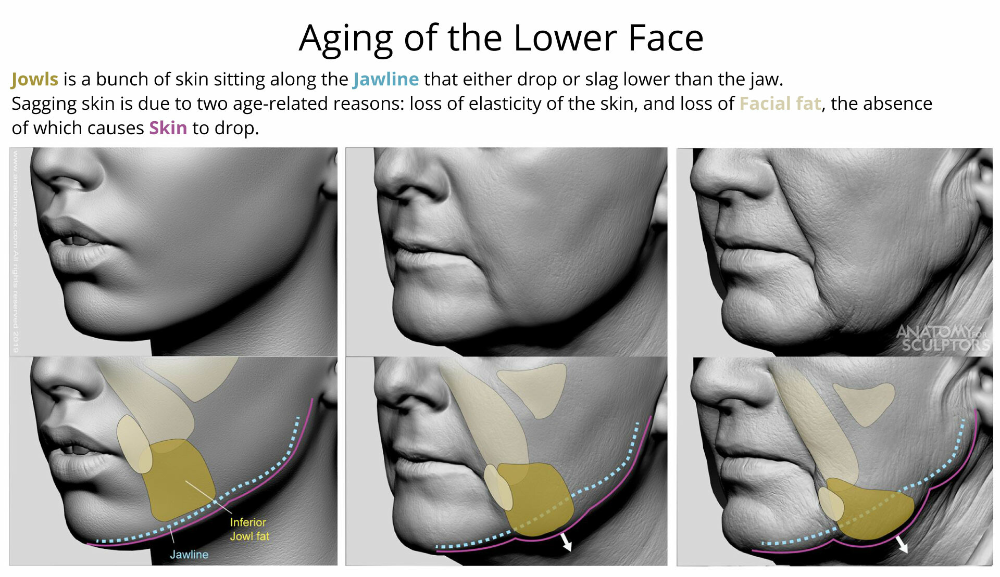
When we examined her face, the issue wasn't around her eyes, where most people assume tiredness lives. It was lower, near her chin and jawline, where volume loss had created a faint shadow that fell across her lower face in certain lighting. That shadow read visually as fatigue, even though nothing about her energy or mood had changed. This is a common and often overlooked pattern. A small loss of structural support near the chin or jawline can cast a shadow that the brain interprets as exhaustion or sadness, regardless of how someone actually feels. It's not about wrinkles. It's about light and structure.
In cases like this, a filler such as Radiesse, which is composed of calcium hydroxylapatite, can be used to restore that lost structural support. The goal isn't to change the shape of someone's face or add volume where it never existed. It's to rebuild what time has quietly taken away, so the light falls the way it used to. Done conservatively, the result isn't a "new" face. That distinction, between changing a face and restoring it, is at the heart of subtle refreshment done well.
Skin Health First, Cosmetic Second
This brings us to the principle that should guide every conversation about facial treatments: skin health first, cosmetic second.
Cosmetic outcomes matter to patients, and that's valid. But they should never come at the expense of skin health, tissue integrity, or long-term facial function. A treatment plan built purely around chasing a cosmetic result, without first understanding the skin's condition and the face's underlying structure, is a plan built on an unstable foundation.
Skin-first thinking means asking different questions before any treatment decision is made:
- Is the skin barrier healthy enough to support this treatment?
- Is the underlying structural loss the actual cause of the visual concern, or is it something else?
- Will this treatment support the skin's long-term health, or simply mask a symptom temporarily?
When skin health leads the conversation, cosmetic improvement tends to follow naturally, and it tends to last longer. When it's reversed, the results are often overdone, unnatural, or short-lived, because they were never addressing the real issue in the first place. This philosophy also protects against a culture that too often pressures people toward more treatment, more frequently, regardless of need. Skin-first care means sometimes the right recommendation is less, or none at all.
Respecting the Choice to Feel Like Yourself
Not everyone who notices a chin shadow, a hollow cheek, or a tired-looking reflection wants to do anything about it. And that's a valid choice too.
For those who do choose subtle refreshment, the goal should never be to look like a different person. It should be to feel like the same person, just without the shadow that made them look more tired than they felt. That's a deeply personal decision, and it deserves to be treated as one, not as a sales opportunity or a checklist of "problem areas" to fix. I don't know how many times me just simply being, warrants people to tell me "smile!" If I have a resting bitch face, leave me be! The point is sometimes the little comments create a deeper impact ("You look tired," "Did you gain weight" "Why do you look mad"), and they all quietly teach people how they're supposed to appear. There's an African proverb for this: not everything you see must be said. Ask how someone is doing instead.
The most meaningful outcomes in this field aren't the dramatic ones. They're the quiet ones — where a friend says "you look great" and leaves it there, no follow-up question about what's different. That's the measure I care about: a face that still looks like itself, just rested.
Whatever you decide, the conversation should start with understanding your own skin and structure first. That understanding, paired with a "skin health first" mindset, is what separates my work. Thoughtful refreshment from anything that just changes the way you look.
Frequently Asked Questions
Why does facial aging often show up as a "shadow" instead of a wrinkle?
Facial aging often begins with volume loss in deep fat compartments beneath the skin, particularly around the chin and jawline. As these compartments lose structure, the resulting change in facial contour can cast subtle shadows that read visually as tiredness, even without visible wrinkles.
What does "skin health first, cosmetic second" mean in practice?
It means any cosmetic treatment decision should start with assessing skin health and underlying facial structure, rather than jumping straight to a cosmetic fix. Cosmetic improvement should be a natural outcome of supporting the skin's health, not the sole goal.
Is subtle facial refreshment the same as looking "different"?
No. Subtle refreshment aims to restore lost structural support so a face looks rested and like itself, not altered. The intent is to remove the appearance of fatigue, not to change someone's natural features.
Is treatment like Radiesse necessary for everyone noticing early volume loss?
No. Choosing not to treat early volume loss is a completely valid decision. Subtle refreshment is a personal choice, and any recommendation should always follow a genuine assessment of skin health and individual goals, not assumed need.