

Blackheads become more common as skin ages because the skin's natural cell turnover process slows down, allowing dead cells and oil to linger in pores longer before oxidizing into those familiar dark dots. While most people associate blackheads with teenage acne, adults in their 30s, 40s, and beyond often notice they're dealing with more congestion, not less. The good news is that this slowdown isn't permanent or untreatable—ingredients like retinoids and chemical exfoliants can help re-train skin to function more like it did in its youth, restoring a clearer, smoother complexion.
How Does Skin Cell Turnover Work?
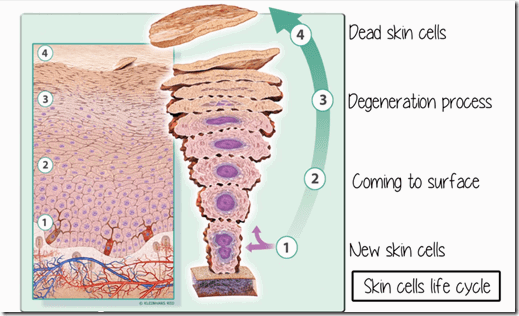
Skin cell turnover is the continuous process by which your skin sheds dead cells from its outer layer and replaces them with new ones generated deeper in the epidermis. This cycle determines how quickly dead skin clears from the surface and how effectively your pores stay free of debris.
In younger skin, this process moves efficiently. Dead cells shed on schedule, oil (sebum) flows to the surface without obstruction, and pores generally stay clear. When you are younger, your skin's natural turnover rate is faster, meaning dead cells shed efficiently, oil flows more freely, and pores stay clearer. This efficient turnover is one of the main reasons younger skin tends to look brighter and more even-toned. When the system works well, there's little opportunity for oil and dead cells to accumulate and clog pores in the first place.
The Conveyor Belt Analogy: How Turnover Slows in Your 30s, 40s, and Beyond
One of the clearest ways to understand skin cell turnover is to picture it as a conveyor belt. In your 20s, that belt moves smoothly and quickly, continuously carrying dead cells to the surface and clearing the way for new, healthy skin underneath.
By your 30s, 40s, and beyond, the belt begins to slow. Cells that would have shed quickly in your younger years now linger longer on the surface. Combined with oil that continues to be produced, this slowdown means pores have more opportunity to become clogged. Without ingredients that actively encourage shedding and renewal, those clogs become more stubborn and frequent.
This is the central reason blackheads often increase with age rather than disappear once the teenage years are behind you. The underlying mechanism isn't hormonal breakouts or teenage excess—it's a structural slowdown in how efficiently skin renews itself. Understanding this analogy matters because it reframes blackheads as a mechanical issue, not a hygiene issue. No amount of washing can speed up a conveyor belt that's mechanically running slower; you need ingredients that intervene at the cellular level.
What Role Do Sebum, Melanin, and Oxidation Play in Blackhead Formation?
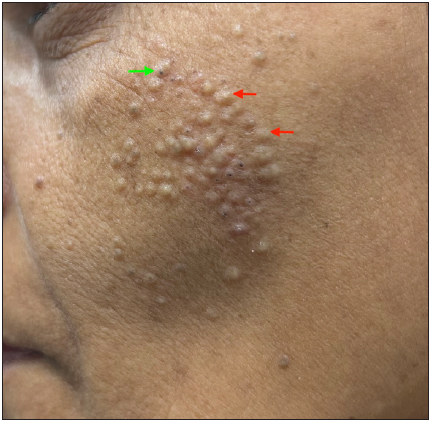
Blackheads (open comedones) form when trapped sebum and dead skin cells inside a pore come into contact with air and oxidize, turning the plug a dark color.
Sebum is the natural oil your skin produces to keep the surface lubricated and protected. On its own, sebum isn't a problem. Issues arise when it combines with dead skin cells that haven't shed properly and becomes trapped within the pore. Once that mixture reaches the surface and is exposed to oxygen, it undergoes a chemical reaction called oxidation. While this is often compared to a cut apple turning brown, the dark color of a blackhead is primarily driven by the oxidation of melanin (the skin's natural pigment) alongside the lipids within the trapped oil.
This is why blackheads appear dark, whether that shows up as black or closer to your natural skin tone. It is not dirt, as many people assume. It is an oxidized plug of oil, dead cells, and pigment sitting at the pore's opening. As turnover slows with age, there's simply more time for sebum and dead cells to accumulate before they are cleared, which increases both the frequency and stubbornness of blackheads.
Do Pores Actually Get Bigger With Age?
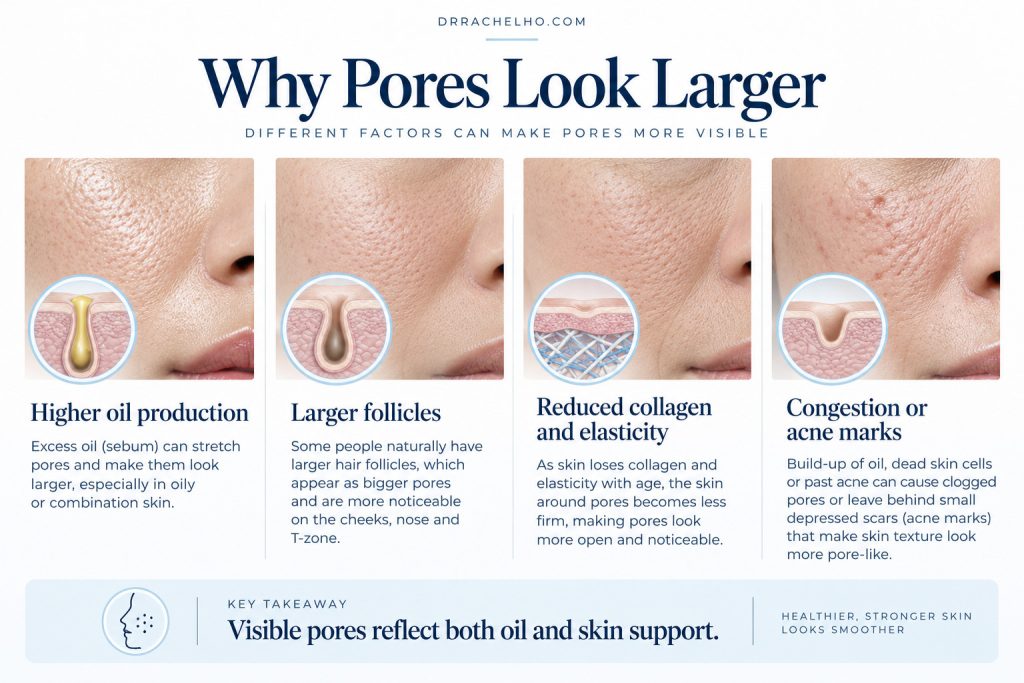
Pores don't physically enlarge in the way many people assume, because pores do not contain muscle tissue that allows them to open, close, or grow. What actually happens is that pores become more visible due to a combination of congestion, loss of skin elasticity, and sun damage over time.
As skin ages, it naturally loses collagen and elastin, the structural proteins that keep pores taut and give the surrounding skin its firmness. When that support weakens, the skin surrounding pore openings relaxes, making them appear to stretch or sag into an oval shape that looks larger.
Add in congestion from the slowed turnover described above, and pores can look even more pronounced, since a clogged plug physically stretches its opening far more than a clear one. In other words, the perception of "enlarged pores" is really a combination of structural matrix loss and surface-level buildup working together.
How Do Other Aging Skin Changes Compound the Problem?
Several natural aging processes work alongside slowed cell turnover to make blackheads more persistent, including structural shifts, altered barrier function, and environmental exposure:
- Reduced collagen and elastin: As mentioned above, this loss of dermal support directly affects how pores appear and weakens the skin's ability to "bounce back" after being stretched by congestion.
- Slower cellular repair: Just as cell turnover slows, so does the skin's overall capacity to repair micro-damage, meaning congestion and post-inflammatory marks take longer to resolve on their own.
- Changes in barrier function: Aging skin often produces less overall moisture and can become more prone to dryness or sensitivity. This leads many people to skip exfoliation out of fear of irritation, inadvertently allowing more dead cell buildup to accumulate.
- Changes in lipid composition: Although overall sebum output often decreases with age compared to adolescence, changes in sebum viscosity and fatty acid composition can make the oil thicker and more prone to trapping dead cells.
- Cumulative sun exposure: Years of UV exposure break down surrounding collagen and cause hyperkeratinization—a thickening of the outermost layer of skin in certain areas—making it harder for trapped oil and cells to find their way to the surface naturally.
Each of these factors interacts with the conveyor belt slowdown, which is why blackheads in adult skin often require a more intentional approach than they did in the teenage years.
Which Ingredients Help Re-Train Skin to Behave More Youthfully?
Three major categories of active ingredients are most effective at addressing blackhead-prone congestion: retinoids, chemical exfoliants, and gentle enzymes. Each works through a different mechanism to restore proper shedding and clarity.
Retinoids (Retinol, Adapalene, Tretinoin)
Retinoids are Vitamin A derivatives that speed up cellular turnover, normalize follicular keratinization, and improve overall skin texture. They work by binding to retinoic acid receptors within skin cells, signaling them to turn over more quickly, shed properly, and produce healthier, more organized cells.
- Retinol is available over-the-counter in varying strengths and serves as an excellent starting point for those new to retinoids or with sensitive skin.
- Adapalene is a third-generation retinoid specifically formulated to target cellular turnover in pores, making it highly effective for stubborn congestion. It is available over-the-counter at 0.1% strength.
- Tretinoin is a prescription-strength retinoic acid that delivers faster, more dramatic results by working directly on cell receptors without needing conversion steps in the skin, though it requires a structured adjustment period.
Retinol is ideal for a gentle introduction to active ingredients; adapalene or prescription tretinoin are better suited for persistent, deeper congestion.

Chemical Exfoliants (AHAs and BHAs)
Chemical exfoliants dissolve the intercellular "glue" (desmosomes) holding dead skin cells together, allowing them to shed efficiently without the harsh friction of physical scrubs.
- Beta-Hydroxy Acids (BHAs), primarily Salicylic Acid: Because salicylic acid is oil-soluble (lipophilic), it is uniquely capable of penetrating through lipid-rich sebum into the interior of the pore. Once inside, it dissolves trapped oil and debris, making it the most direct chemical exfoliant for blackheads.
- Alpha-Hydroxy Acids (AHAs), such as Glycolic and Lactic Acid: AHAs are water-soluble and work primarily on the surface of the skin to loosen dead cells, improve surface texture, and boost hydration. Glycolic acid has the smallest molecular size for deeper surface penetration, while lactic acid offers a larger molecular size with inherent hydrating properties.
AHAs are best if your primary concern is surface dullness and rough texture; BHAs are the gold standard if your main target is clogged pores and blackheads within the follicle.

Gentle Enzymes (Papain, Bromelain)
Gentle enzymes, such as papain (derived from papaya) and bromelain (derived from pineapple), provide mild, surface-level exfoliation.
Unlike AHAs and BHAs, which rely on acid-based pH mechanics, enzymes function proteolytically by digesting specific keratin proteins that hold dead skin cells to the outermost layer. Because they are water-soluble proteins, they cannot penetrate deep into the lipid-filled pore to clear an established blackhead, but they offer an excellent option for surface smoothing in individuals with highly sensitive or reactive skin who cannot tolerate active acids or retinoids.
How Should You Introduce These Ingredients Safely?
The safest way to introduce retinoids or chemical exfoliants is to start with one active ingredient at a time, apply it two to three nights per week initially, and gradually increase frequency as your skin barrier builds tolerance.
- Start slow: Introduce a single active ingredient two to three times per week rather than daily. Monitor your skin for signs of redness, flaking, or tightness before increasing frequency.
- Avoid aggressive layering: Stacking retinoids with strong AHAs or BHAs in the same routine significantly increases the risk of barrier disruption and inflammation. Use them on alternating nights instead.
- Always use daily sun protection: Retinoids and chemical exfoliants uncover fresh skin cells that are more vulnerable to UV damage. Broad-spectrum SPF is non-negotiable when using these ingredients.
- Moisturize consistently: Supporting your skin's lipid barrier with ceramides, fatty acids, and hydrating ingredients helps offset the temporary dryness or flaking that occurs during the adjustment phase.
- Be patient: Because these ingredients work by retraining the skin's natural 28-to-40-day turnover cycle, initial structural improvements typically take four to six weeks, with full clearance taking up to three months.
When Should You Seek Professional Guidance?
Professional guidance is particularly valuable if you have sensitive, reactive, or rosacea-prone skin, if over-the-counter options haven't improved congestion after eight to twelve weeks of consistent use, or if you require prescription-strength interventions.
A licensed practitioner can evaluate your skin's specific barrier health, determine appropriate ingredient strengths, and recommend clinical formulations designed to target follicular keratinization safely. Professional evaluation also eliminates the trial-and-error cycle that often leads to barrier damage from over-exfoliating at home.
Restoring Clearer, Smoother Skin as You Age
Blackheads becoming more common with age isn't a sign that something has gone wrong with your hygiene or skin care—it's simply a natural consequence of a slowing cell renewal cycle. Understanding that this is a mechanical process is the key to managing it effectively without causing unnecessary irritation.
With targeted ingredients like oil-soluble salicylic acid and turnover-boosting retinoids, you can effectively help reset that internal conveyor belt to run smoothly again. The key principles are consistency, barrier protection, and introducing new active ingredients thoughtfully over time.
Reference:
Najeeb A, Gaurav V, Sharma R. Comedones in dermatology. Indian J Dermatol Venereol Leprol. 2024;90:396-407. doi: 10.25259/IJDVL_896_2023