

That frustrating dark spoooooooooots. Yes these bad beyonds can be left behind after the most miniscal thing or pimple. Let's use the correct language first and foremost. I often get consults for scars and when they come in, its a dot or group of dark spots. It isn't a scar in the traditional sense, it's called post-inflammatory hyperpigmentation (PIH), and it's one of the most common skin concerns dermatology offices see today. PIH happens when inflammation triggers an overproduction of melanin, leaving behind a shadow of discoloration long after the original irritation has healed. For people with Fitzpatrick skin types III through VI, this response is especially pronounced, turning even minor blemishes into weeks- or months-long reminders. Understanding what's actually happening beneath the skin's surface — from the melanin-production pathway to the health of your skin barrier, makes it much easier to know which habits and products genuinely support fading, and which ones just sound good on a label.
What is post-inflammatory hyperpigmentation, exactly?
Post-inflammatory hyperpigmentation is the skin's overcorrection response to injury or inflammation. Rather than a scar, it's a flat area of discoloration, brown, gray, or purplish, depending on skin tone, hat forms as melanocytes ramp up pigment production in reaction to trauma. That trauma can come from acne, eczema flare-ups, insect bites, cuts, friction, or even aggressive extractions and treatments.

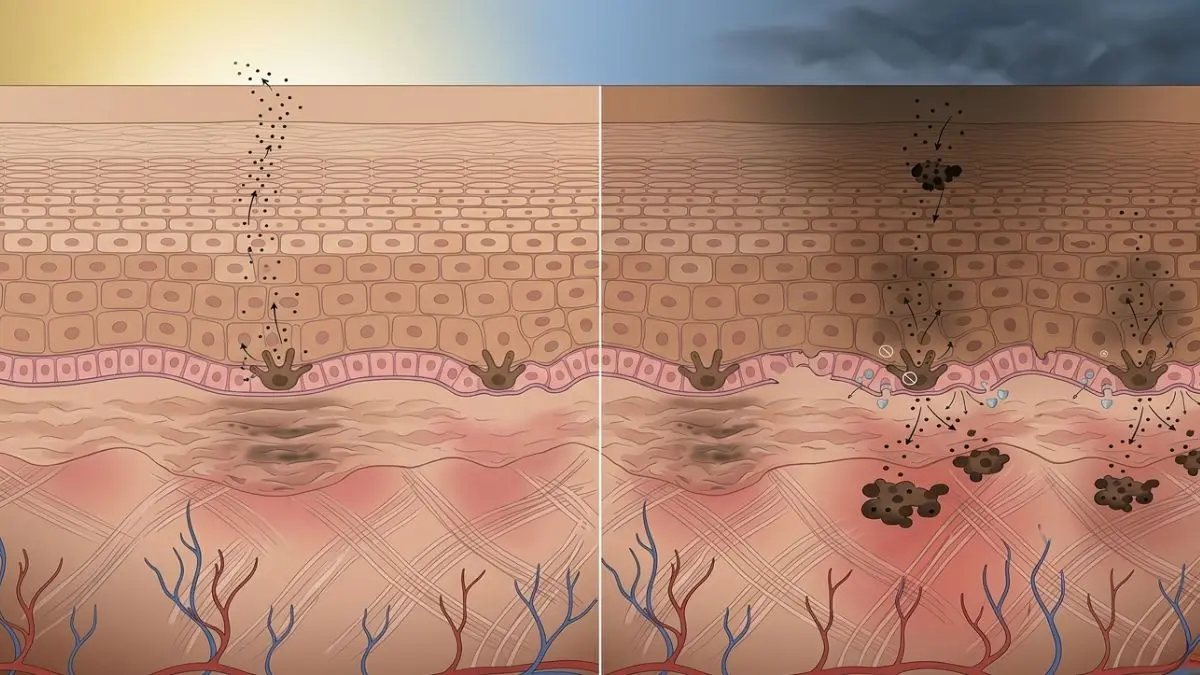
The mechanism traces back to melanogenesis, the biological pathway responsible for producing melanin. It starts in the pituitary gland, which produces a precursor hormone called proopiomelanocortin (POMC). POMC gives rise to melanocyte-stimulating hormone (MSH), which binds to receptors on melanocytes and keratinocytes and sets off the next stage: activation of the enzyme tyrosinase. Tyrosinase converts the amino acid tyrosine into melanin, which is packaged into structures called melanosomes inside the melanocyte. At this stage, the melanin is almost colorless, it only darkens visibly once the melanosome transfers into a keratinocyte and travels up through the epidermis toward the surface of the skin.

Inflammation short-circuits this otherwise orderly process. It sends melanocytes into overdrive, accelerating melanin production and melanosome transfer far beyond what's needed for normal pigmentation. The result is a localized buildup of pigment that lingers long after the original injury has healed, sometimes for months. So hear me well, it's not AlWaYs AbOuT TyRoSinAsE InHibAtOrs! The internet is tyrosin me to death....it's more complex than that one pathway, yes it blocks the chain reactions after....but i degress.
PIH affect darker skin tones more severely...Sometimes
Skin classified as Fitzpatrick types III through VI carries a genetic predisposition toward more reactive, higher-output melanocytes, which makes these skin tones significantly more prone to developing pigmented lesions after inflammation. This isn't a flaw in the skin, it's simply a difference in how efficiently the melanogenesis pathway responds to triggers like breakouts, heat, or even certain in-office treatments such as that induce inflammation like IPL.
This heightened sensitivity means that a healing pathway which might leave lighter skin virtually unmarked can leave a visible, lasting mark on deeper skin tones. It also means that the same trigger, a single inflamed pimple, a bug bite, a friction burn, can result in a much more stubborn or widespread patch of discoloration. Because phototypes III through VI are considered "high risk" for pigmentary changes, dermatology and skincare protocols for these skin tones typically place a much heavier emphasis on prevention: minimizing irritation and inflammation before it ever has the chance to trigger the melanin cascade. This is why I am very strict with priming the skin before procedures and post op care. If you can't commit, we can't work together. Simple. It's not about upselling you on anything, its safety and evidence based practice of medicine.
Is PIH temporary, or is it permanent damage?
Most post-inflammatory hyperpigmentation is temporary and epidermal, meaning it sits in the upper layers of skin and can fade naturally as those cells shed and renew through desquamation. In many cases, proper skin care and consistent barrier support can visibly improve a substantial portion of this superficial pigmentation over time.
The distinction that matters is depth. Epidermal PIH involves excess melanin sitting near the surface, where it's more responsive to topical care and natural cell turnover. Dermal pigmentation, on the other hand — the kind seen in conditions like solar lentigines — reaches deeper into the skin and can involve actual structural damage to the melanocyte itself, including damage to its mitochondrial DNA. When that happens, the cell no longer produces pigment in its normal, regulated way, and fading takes considerably longer, often requiring professional intervention 100% of the time rather than at-home care alone. Think of a tattoo.
This is an important nuance: topical products can meaningfully support the fading process for surface-level discoloration, but they're not a substitute for a professional's evaluation if a dark spot has persisted for many months or appears to be getting deeper rather than lighter. That is where I come in. Often times people come to me as a last resort.
How does skin barrier health affect pigmentation and healing?
A compromised skin barrier doesn't just feel uncomfortable — it actively prolongs the inflammatory response that fuels PIH in the first place. The skin's barrier defense relies on three layers working together: the acid mantle, the hydrophobic keratin cells of the stratum corneum, and the lipid bilayers underneath, which are largely made up of ceramides. When these layers are intact, they regulate transepidermal water loss (TEWL) — the rate at which water evaporates from the skin — and keep the tissue calm, hydrated, and functioning normally.
When the barrier is disrupted, TEWL increases, and that water loss creates a chain reaction. Enzyme activity inside the skin becomes impaired, which throws off desquamation (the natural shedding of dead skin cells), misaligns the lipid bilayers, and dries out the skin's natural lipid content. The end result is a cycle of irritation — often visible as redness, burning, or itching — that keeps inflammation active longer than it needs to be. Since inflammation is the very trigger that sets off excess melanin production, a stressed, dehydrated barrier essentially keeps pouring fuel on a fire that pigmentation-prone skin can't afford to keep burning.
This is why hydration isn't just a "nice to have" step in a routine built around fading dark marks — it's foundational. Adequate water content in the epidermis supports the hydrophilic enzymes responsible for healthy desquamation, helping the skin shed pigmented surface cells at a normal pace rather than holding onto them. Humectants like hyaluronic acid work by drawing and holding water within these layers, supporting the water phase of the bilayers and helping the skin maintain the conditions it needs to calm down and recover.

Which ingredients actually target the melanin pathway?
Different ingredients intervene at different points along the melanogenesis pathway, which is why combining them often makes more sense than relying on a single active. None of them stop pigmentation, correct existing damage, or work as an overnight fix — but each targets a specific step in the process where excess melanin is created or moved.
Niacinamide (vitamin B3) works further along the pathway, at the transfer stage. Rather than blocking melanin production itself, niacinamide interferes with the physical transfer of melanosomes from melanocytes to keratinocytes, which is the step responsible for pigment actually reaching the surface layers of skin where it becomes visible. Niacinamide also supports ceramide synthesis and helps reduce transepidermal water loss, which ties directly back to the barrier-health equation above — it's an ingredient that works on two fronts at once.
Arbutin and glabridin, an extract derived from licorice root, both act earlier in the process as tyrosinase inhibitors. Tyrosinase is the enzyme that converts tyrosine into melanin, so slowing its activity means less pigment is generated at the source. Glabridin in particular also carries antioxidant and anti-inflammatory properties, which matters given how closely inflammation and excess pigment production are linked.
Because a successful approach to resistant pigmentation typically requires interfering with the melanin pathway at more than one stage, formulas that combine a melanosome-transfer inhibitor with tyrosinase-inhibiting botanicals can offer more comprehensive support than any single ingredient alone.
How can a routine support fading, without overpromising a fix?
Given everything above, the most effective approach to PIH-prone skin combines three things: calming inflammation before it escalates, reinforcing the skin's barrier so it isn't prolonging that inflammation, and incorporating ingredients that interrupt the melanin pathway at multiple points. Good Molecules sent me these items to try and they have built their approach to pigmentation-prone skin around exactly this framework, with products designed to support and help strengthen the barrier and minimize the intensity of PIH over time — not to correct or erase it.

The Hyaluronic Acid Serum addresses the hydration side of the equation directly. Because water content in the epidermis governs how well enzymes function and how efficiently pigmented cells shed through desquamation, keeping skin properly hydrated is one of the most overlooked tools for supporting a faster, calmer recovery from inflammation-triggered discoloration.
The Niacinamide Brightening Toner brings a melanosome-transfer inhibitor into the routine at the toning step, layering easily underneath serums and moisturizers. Since niacinamide interferes with pigment transfer rather than pigment production, it works well as a daily, low-irritation way to support skin that's actively trying to calm down after a breakout or irritation.
The Dark Spot Microdart Patches combine several of these mechanisms into a targeted spot treatment, using ingredients like niacinamide alongside licorice root extract to support brightening exactly where a dark mark has formed. Because they're designed for direct, localized application, they concentrate support where skin needs it most, rather than spreading active ingredients evenly across the whole face.

None of these products stop excessive melanin production entirely or reverse pigmentation that has already reached deeper, structural layers of skin. What they do is support the skin's own processes — hydration, barrier repair, and pigment transfer — that determine how efficiently a dark mark fades on its own.
Building a routine that actually respects the biology of PIH
Post-inflammatory hyperpigmentation isn't a sign that skin is doing something wrong — it's a sign that skin, especially deeper skin tones, is doing exactly what it's biologically wired to do in response to inflammation. Respecting that biology means treating prevention and barrier health as seriously as any brightening ingredient: calming irritation early, keeping skin hydrated enough to support healthy shedding, and choosing actives that interrupt the melanin pathway at more than one stage.
For most people, this looks like patience paired with consistency rather than a quick fix. Give hydrating and brightening ingredients time to work alongside the skin's own renewal cycle, and reserve deeper or long-standing pigmentation for a conversation with a dermatologist, who can assess whether it's still epidermal or has progressed to something that needs a more targeted approach.
Frequently Asked Questions
How long does post-inflammatory hyperpigmentation typically take to fade?
Epidermal PIH generally fades over the course of several weeks to a few months as skin naturally sheds pigmented cells, though timelines vary significantly based on skin tone, the severity of the original inflammation, and how well the skin barrier is supported during recovery.
Can post-inflammatory hyperpigmentation go away on its own without treatment?
Yes, epidermal PIH often improves gradually without intervention as part of the skin's normal renewal cycle, though supporting the barrier with hydration and using ingredients like niacinamide can help the process along.
Is post-inflammatory hyperpigmentation the same as melasma?
No. PIH is triggered by a specific inflammatory event like a breakout or injury, while melasma is a chronic pigmentation condition typically linked to hormonal changes and sun exposure, and it often requires a different, more sustained treatment approach.
Who is most at risk of developing PIH?
People with Fitzpatrick skin types III through VI are at the highest risk, due to a genetic predisposition toward more reactive melanocyte activity in response to inflammation, trauma, or heat.
When should someone see a dermatologist about dark spots instead of treating them at home?
If a dark mark persists for more than several months, appears to be deepening rather than fading, or developed without a clear inflammatory trigger, it's worth having a dermatologist assess whether the pigmentation has progressed beyond the epidermis.